I think she's right. And in my world it's one of the most undervalued skills we've got, and one of the least developed.
It's not that we don't have it, we just don't value it.
Nothing happened, so there's nothing to thank them for
Think about who gets thanked in IT. It's the engineer on the bridge call at two in the morning who got everything back up. Rightly so, but the person who spotted in March that two teams' changes were heading for each other, and got them in a room, doesn't get a call at all. Nothing happened, so there's nothing to thank them for.
And we don't grow it either. Most careers in IT services are built in boxes. Service desk, then second line, then a specialism, then running the box. You can be twenty years in and never once be asked what your box does to the one downstream.
I said at an event earlier this year that great service desks aren't great because the system is great. They're great because they make up for it. A lot of people nodded, and I suspect most of them were the ones doing the making up.
And as AI takes the routine work, what's left for people is exactly this bit. Spotting where things keep going wrong, and changing something upstream so it stops.
I'd keep all of it except the "vs."
But seeing the system is only half the job. I put this slide up at another event in 2024, and I'd keep all of it except the "vs." (I put that there as it made a better slide.)
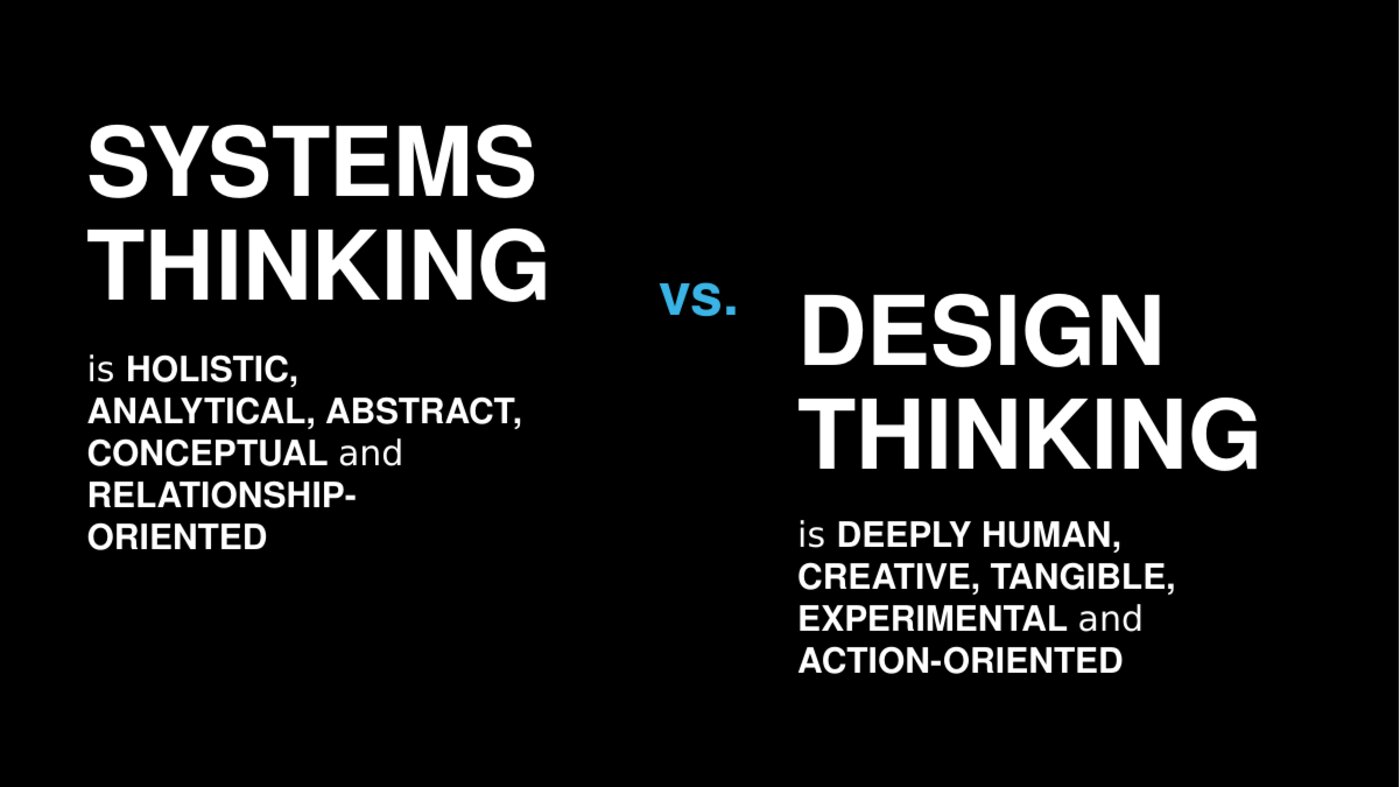
Systems thinking tells you where to look. Design thinking sits with the person stuck in it, tries something small and gets it in front of them quickly. On its own, the first gets you a beautiful map of every dependency and nothing different on Monday. The second gets you a lovely new journey for one group of users, and the queue moves next door.
So we'd better start teaching both and finding the people who already do it.
They're not hard to spot. They're the ones who keep asking why, in meetings that were meant to be about when.