Mark Boyer
Speaking · the talks, the formats, the practical detail

Four arguments. One direction.

Mark does not deliver the kind of talks that leave audiences with a checklist and a warm feeling. He delivers the kind that make audiences question whether the checklist was ever the right thing to build. Four talks, four chapters of one thesis, the Human Operating Model, drawn from inside the daily work of running a £550M services organisation.

Now booking · next twelve months Keynote · Breakout · Panel · Fireside · Workshop · Podcast
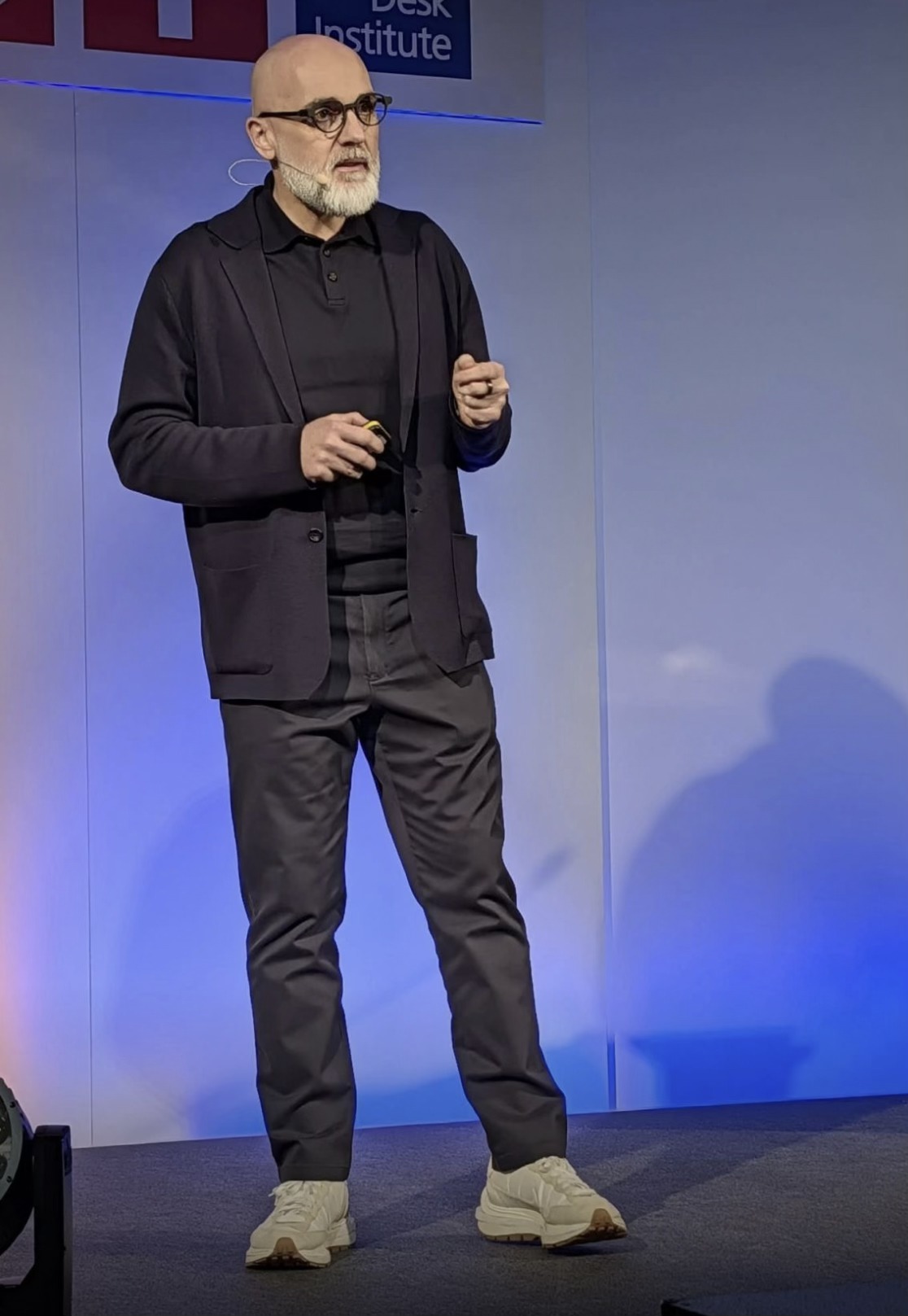
Mark Boyer mid-keynote on the SDI stage
In full flow

No podium scripts. No slide-by-slide lecture. Structured narrative, live interaction, and something to argue about over coffee.

"As masterful as ever. He owned that stage."

Audience reaction · SITS 26, main stage

Hear him think

Before you book him, listen to him.

Two extracts from an hour in conversation with FRONT&CENTRE — the full episode is out now ↗. Not a stage, but the same arguments, unrehearsed and under questioning. Stage footage to follow.

“We’re clinging to it out of fear, trying to remain relevant.”The Guest List · FRONT&CENTRE · 1 min 13 · Full episode ↗
“My customer is not my end user.”The Guest List · FRONT&CENTRE · 1 min 9 · Full episode ↗
01AI · Operating models · Boards

AI lands or stalls in the operating model.

Sixty-four per cent of UK organisations say they are using AI. Only twenty-four per cent have reached anything close to mature adoption. The gap is not a technology gap. It is an organisational design gap. Most operating models were never built to absorb intelligence, and no amount of platform spend will fix that.

You cannot layer intelligence onto an unintelligent structure and expect transformation.
02Service design · The future of service

What "service" means when AI is in the room.

Gucci is making smart glasses with Google. Meta is selling AI Ray-Bans for $499. Within eighteen months a meaningful chunk of the workforce will be wearing cameras, microphones and AI assistants on their faces.

How do you write a BYOD policy for someone's face?
03ITSM · Profession · Change

A profession built to manage change is the worst at handling its own.

ITSM has become brilliantly organised at describing yesterday. We mistake legibility to ourselves for value to our customers. Comfort bureaucracy for governance. Defensible work for distinctive work.

If we cannot change our own profession, we have no business telling anyone else we know how to lead change.
04Service design · Language · Experience

The language we use is the architecture of the experience we deliver.

Take any service catalogue. Remove every acronym, every internal code, every framework reference. Show it to a customer. Ask them what they are buying. If they cannot tell you, you have not built a catalogue, you have built a glossary for insiders.

If your customers need a glossary to understand your catalogue, the problem is not their vocabulary. It is yours.
Where the argument has been made

Main stages, and the rooms after them.

SITS 26Main stage keynote
SDI Spark 26Keynote
itSMF UKKeynote
PropelX LondonKeynote
NEXTCIOPanel
BoardroomsPrivate, where AI investment gets decided

Recognised as an IT Oxygen Influencer 2025 and an HDI Top 25 Thought Leader 2025. Bios at three lengths, photography and fast facts are in the press and speaker kit.

From the audience

Letters from the room.

As masterful as ever. He owned that stage. Not just the brilliant material, but a genuine public speaking masterclass.

Audience reaction · SITS 26, main stage

By far the best speaker we saw, very relevant and inspirational.

Audience reaction · SDI Spark 26

By far the most engaging and thought-provoking talk I watched across both days of the conference.

Audience reaction · SDI Spark 26

Mark challenges the traditional model of IT support. The future of great service isn't just about better tools, it's about creating better experiences for customers and colleagues alike.

Simon Edwards · NEXTCIO 2025 Award Winner
Formats & logistics

The practical page.

Keynote

40 to 50 minutes, main stage. Designed to open or close a conference, challenge assumptions, and give the audience something to argue about over coffee.

Breakout

30 minutes, adapted for smaller rooms and more focused audiences. Strong with leadership cohorts and senior practitioner groups.

Panel & fireside

Available for moderated panels and conversational fireside chats on AI, service management, leadership, design thinking and operational excellence.

Workshop

Half-day or full-day sessions on design thinking in service management, service blueprinting, or leadership development.

Logistics

UK-based. Available nationally and internationally. All talks customise to specific audiences, industries and themes.

AV

Screen, clicker, lapel or headset mic preferred. No podium. Mark works from structured narrative and live interaction, not slide-by-slide lecture.

Grounded in something.

The thinking is not only argued from stages. Shift Right is a working diagnostic that practitioners buy and run on their own operations, and an eighteen-page worked example shows the depth it goes to. Useful if a committee wants evidence the keynote comes from the work.

The one-sheet & press kit.

A single page to forward to your committee, and a full press & speaker kit with bios at three lengths, photography and fast facts.

Download the PDF
The invitation

Want Mark on your stage?

Get in touch to discuss topics, formats and availability. Mark typically responds within 48 hours.