How many of you have delivered a project on time and budget, only for the business to still be disappointed?
Today I want to share a story. Not about technology. Not about tools. About people, culture, and how Professional Services can transform from being a delivery function to being a strategic enabler of outcomes.
The customer name in this story is confidential. Let's call them CustomerX. But the challenges and the journey will feel real to many of you in the room.
How many of you have delivered a project on time and on budget, only for the business to still be disappointed? That is the problem we had to tackle.
What Professional Services actually does
At Softcat, our ambition is simple, to be the leading IT infrastructure solutions provider. The way we achieve that is not just by selling technology. It is by putting the customer first, understanding their needs deeply, designing solutions around outcomes. Outstanding customer service is the foundation of everything we do.
Our Professional Services capability is central to that. We do not just advise or implement. We design, manage, optimise, and protect. We connect everything in the digital ecosystem, and we unlock insight from data so that technology actually creates value.
But, and this is the awkward bit. We are an IT solutions provider. Regularly seen as a box shifter. So we had to build a capability that would stand us apart from our competitors and allow us to offer those services to ten thousand-plus customers.
Our Services are built around five technology towers. Workspace, agile digital workplaces that empower people to be productive, creative, and collaborative anywhere. Hybrid Platforms, modernise, optimise and protect infrastructure across on-premises, edge, and cloud. Cyber Security, secure the digital future, embedding best practice into every stage from assessment to ongoing management. Networking and Connectivity, connecting anything to everything, building resilient intelligent networks. Data, Automation and AI, helping organisations harness their most valuable asset, streamlining complex processes, unlocking insight that drives faster, smarter decisions.
Together these come together not as a portfolio of services, but as the foundation for customer outcomes.
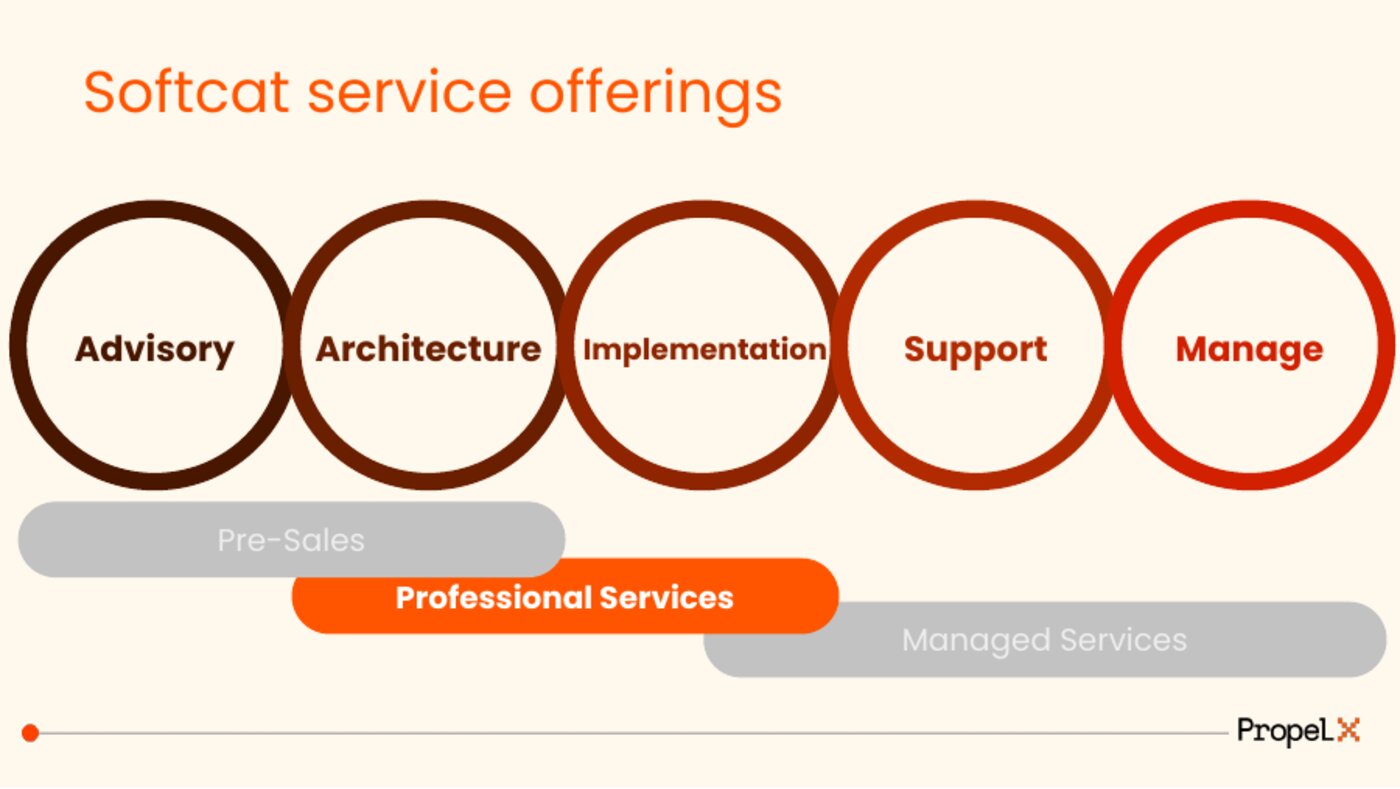
Our PS capability runs through the service flow, from advisory teams giving expert guidance on technology strategy, into architecture teams offering solution design and technical planning, into implementation, into managed services for proactive and reactive maintenance.
Plenty of projects. Plenty of vendors. No outcomes.
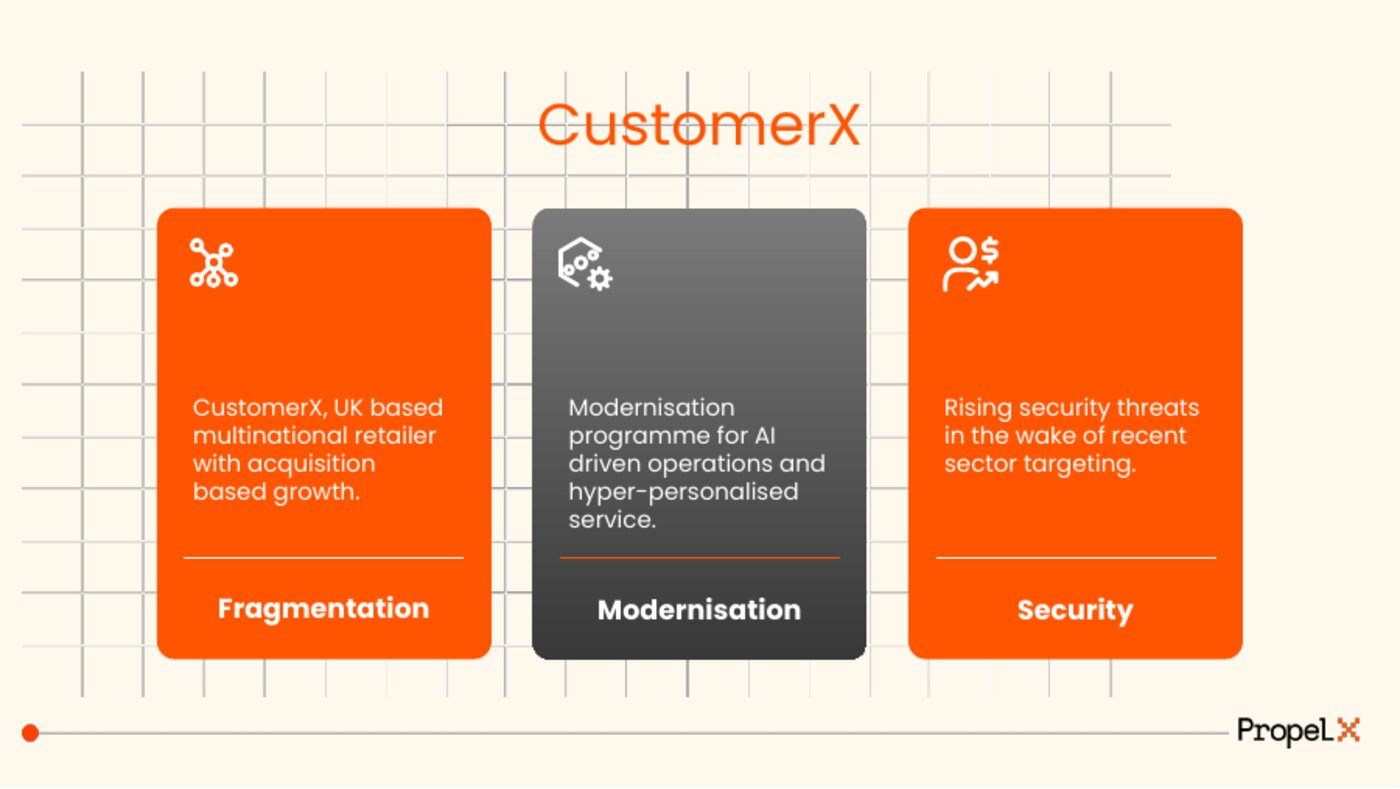
CustomerX is a multinational retailer. Brilliant at their core business. Struggling with IT that had grown patchy, siloed, and hard to secure. Imagine an employee losing fifteen minutes every morning waiting for logins. A board member asking why AI pilots never scale. I am sure these strike a familiar tone.
Many of you have probably faced the same, multiple cloud platforms, pressure to "do AI", security noise, and employees wondering why IT never just works. That is exactly what they had. Multiple cloud platforms running in parallel. Rising cyber security threats. Pressure from their board to modernise for AI. A workforce frustrated by slow, inconsistent digital services.
And here is the kicker. They had plenty of projects. Plenty of vendors. No outcomes.
Their CIO said something that stuck with me. "We had suppliers, we had projects, but what we didn't have was confidence that it would all come together."
That is where our Professional Services opportunity came in. But here is the truth. The way our PS was traditionally set up would not have solved their problem. Day-rate utilisation. Siloed consultants. Late entry into the sales cycle. That only delivers fragments. Not outcomes.
The six moves that changed everything
So we took a different approach. We re-imagined how Professional Services showed up for CustomerX. Six things changed everything.
One, aligned to tech towers. We did not just throw bodies at the problem. We mapped our PS capability directly to the strategic technology priorities, cloud, security, workspace. Instead of focusing on utilisation, we focused on contribution to tower growth.
Two, pipeline visibility. We created a forum where Sales, Architecture, and PS shared pipeline early. That meant we could allocate the right skills at the right time, instead of PS being pulled in too late. One pipeline session identified a security project six months earlier than we would normally see it, which meant we could line up the right consultants at the right time.
Three, productised services. No more custom one-off projects that drain efficiency. We built outcome-based "tracks", advise, architect, implement, optimise, each with clear scope, pricing, and value. Like a menu. Customers know exactly what they are getting. We know exactly how to deliver it.
Four, culture shift. We reframed PS from delivery executors to strategic enablers. Consultants were embedded from day one, accountable for outcomes, not just hours billed. For many consultants, this was uncomfortable. They were used to billing hours, not owning outcomes. But it was a shift we had to make.
Five, innovation layer. We layered in automation and AI. Tools that validated solution designs automatically. Digital twins that modelled migration before a single workload moved. That reduced risk, increased speed, and gave the customer confidence. We worked with one of our premier vendors and built a digital twin of their migration. When the CIO saw we could test five hundred workloads virtually before moving a single one, that was the moment their confidence grew.
Six, partner network. We did not try to do everything ourselves. We tapped into our partner ecosystem to extend capacity and capability. Trusted partners became an extension of our team, delivering against the same standards, playbooks, and governance. That gave CustomerX the scale of a global consultancy with the agility of a local partner.
A safe, mirrored sandbox before anything moves
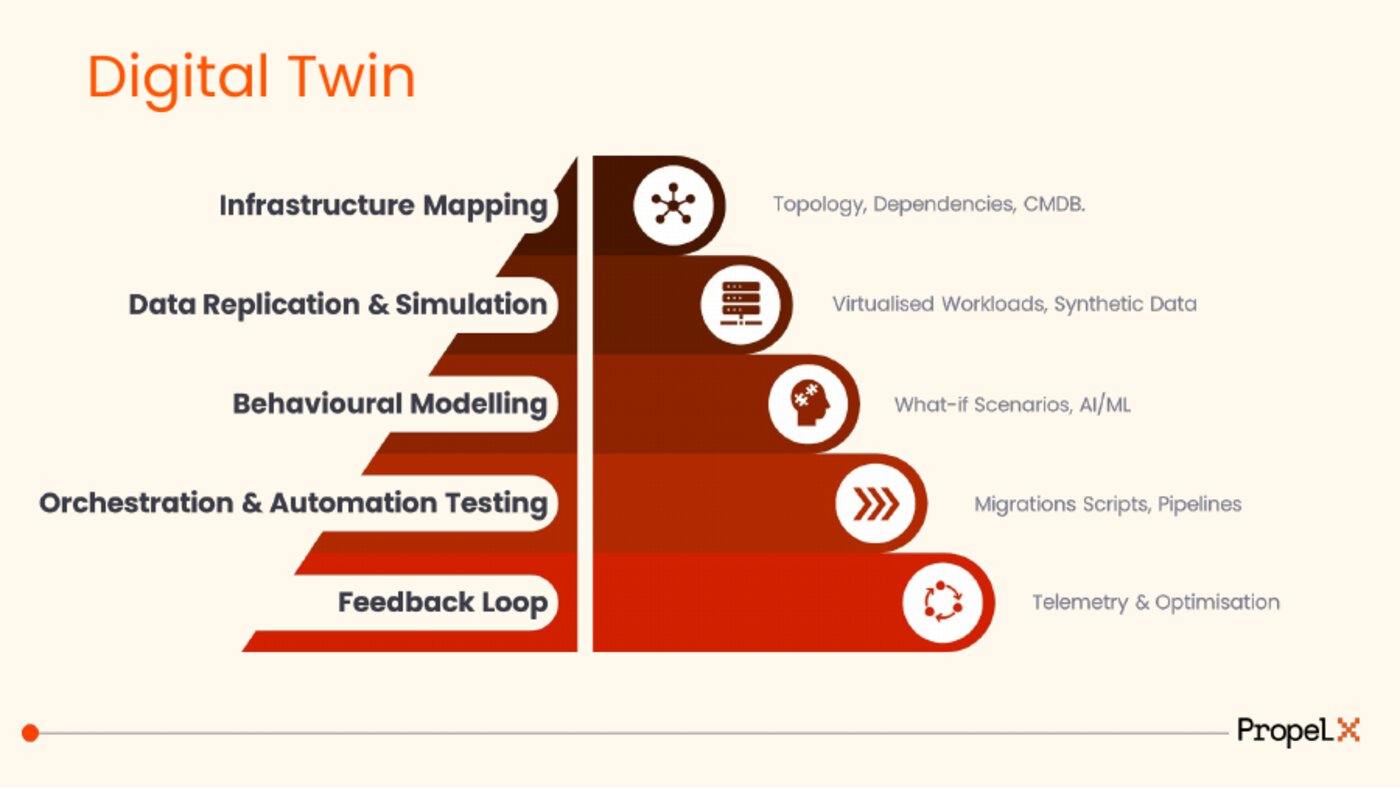
A digital twin in the context of Professional Services and CustomerX is a layered, virtualised representation of their IT environment. Think of it as a safe, mirrored sandbox that allows us to model, test and optimise before touching production.
It works in five layers.
Infrastructure mapping. Discovery tools auto-map servers, applications, workloads, dependencies, and data flows. This creates a baseline topology: a map of what talks to what, and how. Data replication and simulation. Key workloads and data sets are mirrored in a controlled, virtualised environment. Synthetic or masked data simulates traffic without risk. Policies and configurations are replicated so you can see how systems behave under load or failover. Behavioural modelling. AI and automation layers simulate what-if scenarios. What if we shift this workload to Azure? What if the firewall rules change? What if ten thousand more concurrent users log in? You can stress-test before committing, exposing weak points and tuning performance.
Orchestration and automation testing. Migration scripts, pipelines, automation playbooks all run in the twin environment first. Errors are caught early. Sequencing is refined. The runbook gets hardened in the twin before it ever touches production. Continuous feedback loop. Once live, telemetry from production updates the twin. The twin stays accurate, no longer a one-off migration tool but an ongoing decision-support model for optimisation, patching, scaling, or introducing AI workloads.
Scale without ecosystem chaos
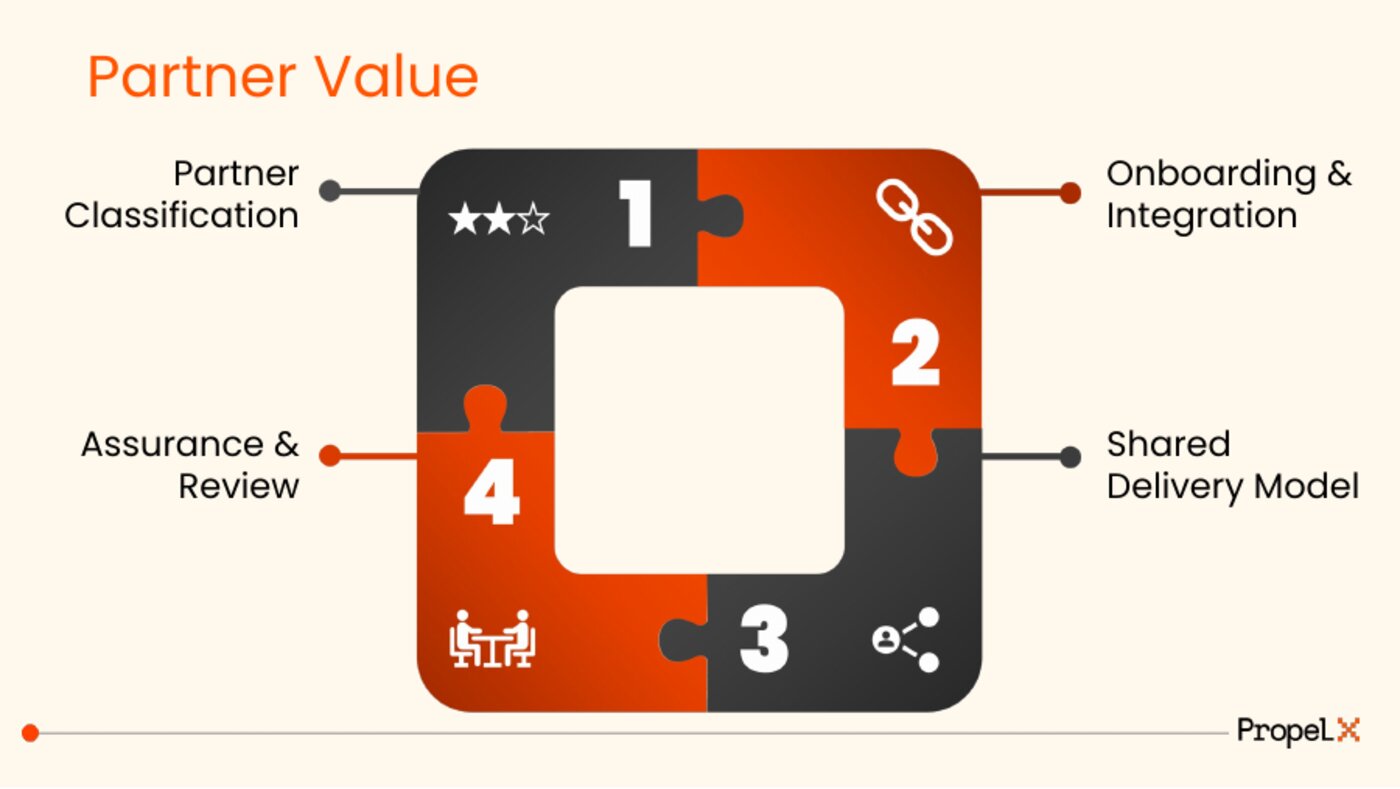
Our partner network gives us breadth of world-class services at scale and pace. The model allows for breadth of capability without compromising control, consistency, or customer experience.
Every partner is classified using our Partner Management Framework, aligning on maturity, compatibility, and governance. Partners are onboarded into our cadence, not run in parallel. Shared tooling, reporting, and escalation models create true collaboration. We establish automation handoffs from the outset to reduce friction, improve responsiveness, and scale efficiently. Every partner is assessed and governed using consistent criteria, ensuring they meet our service standards before, during, and after go-live.
For customers, seamless integration, no finger-pointing. Consistent service experience, regardless of who delivers. Trust in our governance and assurance model.
Stop thinking in projects. Start thinking in value streams
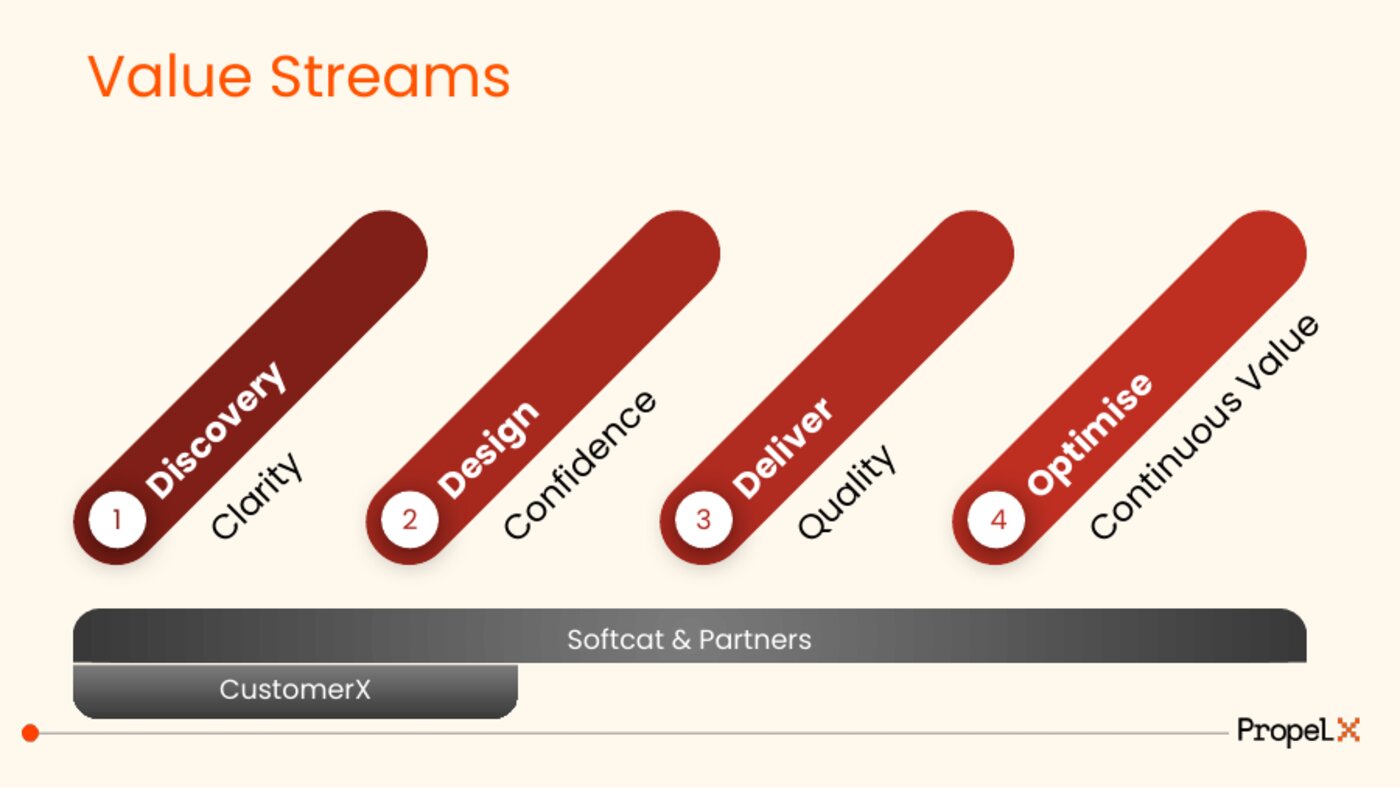
When we started with CustomerX, we quickly realised projects were not the right lens. Projects are temporary. Fragmented. They often finish before the real value is proven.
So instead, we mapped their needs into value streams, continuous flows of activity that connect business demand to business outcome.
It begins with Discovery, where the outcome is clarity. Clarity of what matters most to the business, not just the IT function. Then we move into Design, and this is about confidence. Confidence that the solution is right, tested, and assured. Next comes Delivery, and here we focus on quality. Quality that is consistent, governed, and backed by our partners as part of one team. And finally Optimisation, where the real differentiator is continuous value. Not one-and-done. We return, measure, adapt so the outcomes keep improving.
What makes this powerful is that it is not just Softcat operating in the stream. It is CustomerX, Softcat, and our partners together. Everyone aligned in the same flow, pulling in the same direction.
That is when the conversation shifted, from projects, timelines, day rates, to outcomes, confidence, business impact.
Discovery. Delivery. Optimisation.
Stage one, Discovery. We did not start with technology. We ran a joint design sprint with their business leaders, architects, and our consultants. We mapped value streams. We worked out where the real outcomes were hiding. Even here, our partner ecosystem was in the room. Specialist vendors and niche delivery partners helped us shape what was realistic, and what would unlock the most value.
Picture twenty people in a room. Business leaders, architects, consultants, partners. Sticky notes everywhere, mapping value streams. That is where the penny dropped. The problem was not cloud. It was not AI. It was customer checkout times and data resilience.
Stage two, Delivery. When we moved into implementation, we used standardised playbooks. Every design went through Tech Assurance peer review. Every deliverable followed shared templates. Quality was not left to chance.
And here the partner network really came into its own. We blended Softcat consultants with partners handpicked for their expertise in specific technologies. But, and this is key. They did not deliver as outsiders. They delivered as part of one team, governed by the same standards, the same governance, the same outcome focus. To CustomerX, it looked like one seamless team. That is the beauty of a governed partner ecosystem.
Stage three, Optimisation. Perhaps the most important stage. We did not just walk away when the last system went live. Our consultants came back quarterly to review business impact. Were the promised outcomes being realised? Were users satisfied? Was the platform performing?
The magic was not at go-live. It was in the quarterly reviews. Each time we sat down, we did not ask "did the system work?" We asked "did the business outcome improve?"
And again, the partner ecosystem stayed central. Partners did not deliver and disappear. They remained part of a long-term operating rhythm. They contributed insights, benchmarked best practice, kept CustomerX aligned to fast-moving vendor roadmaps. One partner spotted an emerging security threat vector months before it hit the press. That is the value of an ecosystem.
What optimisation actually found
The optimisation phase was where the real difference showed up. For CustomerX, this was not about quarterly check-ins to tick boxes. It was about proving the outcomes we promised, and finding new ways to improve.
User experience gaps. Employees were still losing time at log-in. We identified this through end-user feedback surveys and telemetry, and worked with Workspace specialists to resolve it. That alone saved thousands of hours a month. Security posture improvements. By analysing incident data post-implementation, we spotted a pattern of repeat low-level breaches. With our partners, we tuned controls and reduced logged incidents by 25%. Cloud efficiency. Using monitoring data, we uncovered overprovisioned workloads costing CustomerX millions annually. We re-architected, cutting cost while improving performance. AI readiness. We stress-tested platforms in the digital twin to validate they could safely run their first AI-driven workloads. That gave the board confidence to greenlight new initiatives.
Optimisation was not the end of the stream. It was the beginning of continuous improvement. CustomerX knew we were in it with them, not just for delivery, but for the long haul.
What the numbers actually said
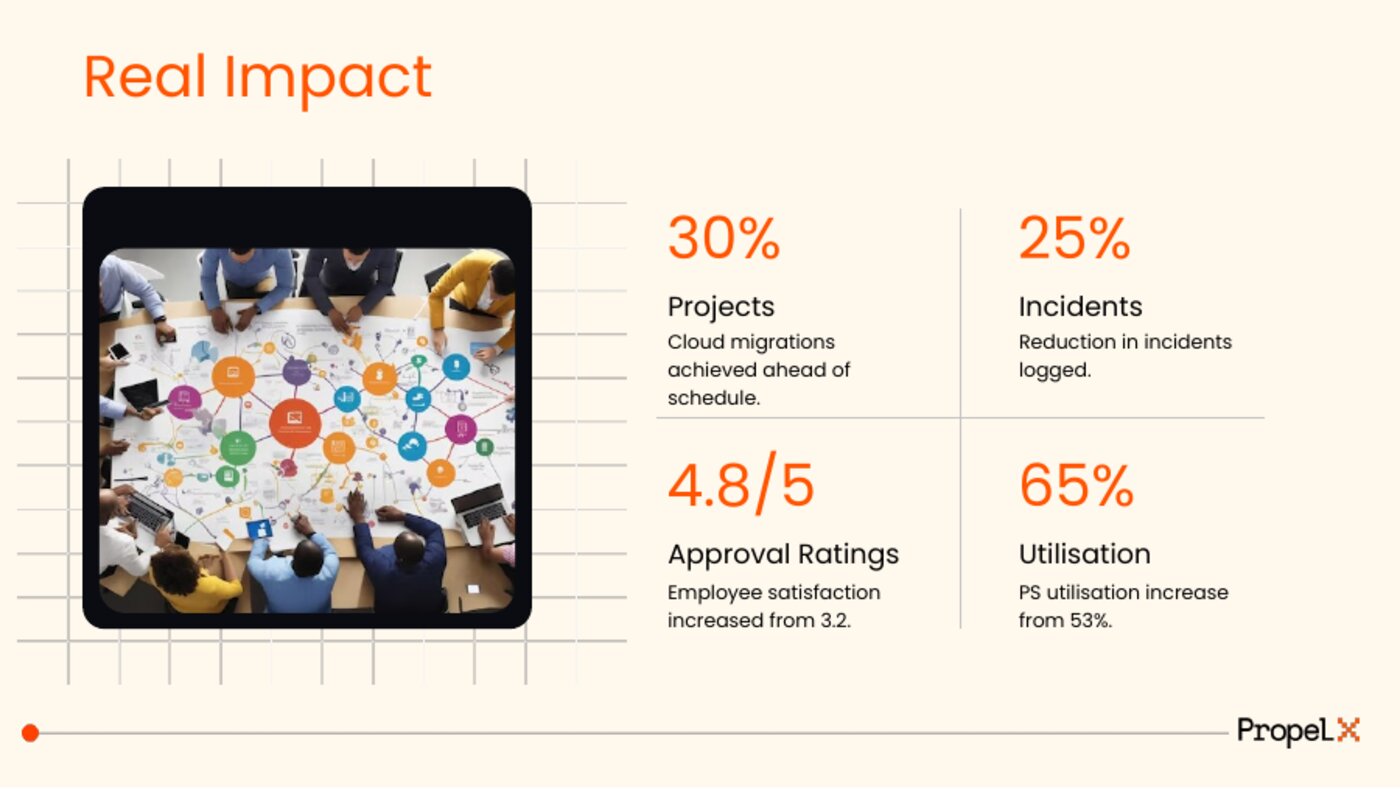
Cloud migration completed 30% faster than plan. Cyber resilience improved with a 25% reduction in logged incidents. End-user satisfaction went from 3.2 to 4.8 out of 5. And for us, consultant utilisation improved, because consultants were not stuck chasing hours, they were contributing across pre-sales, enablement, and optimisation.
Outcomes, not projects. Trusted advisors, not hired hands.
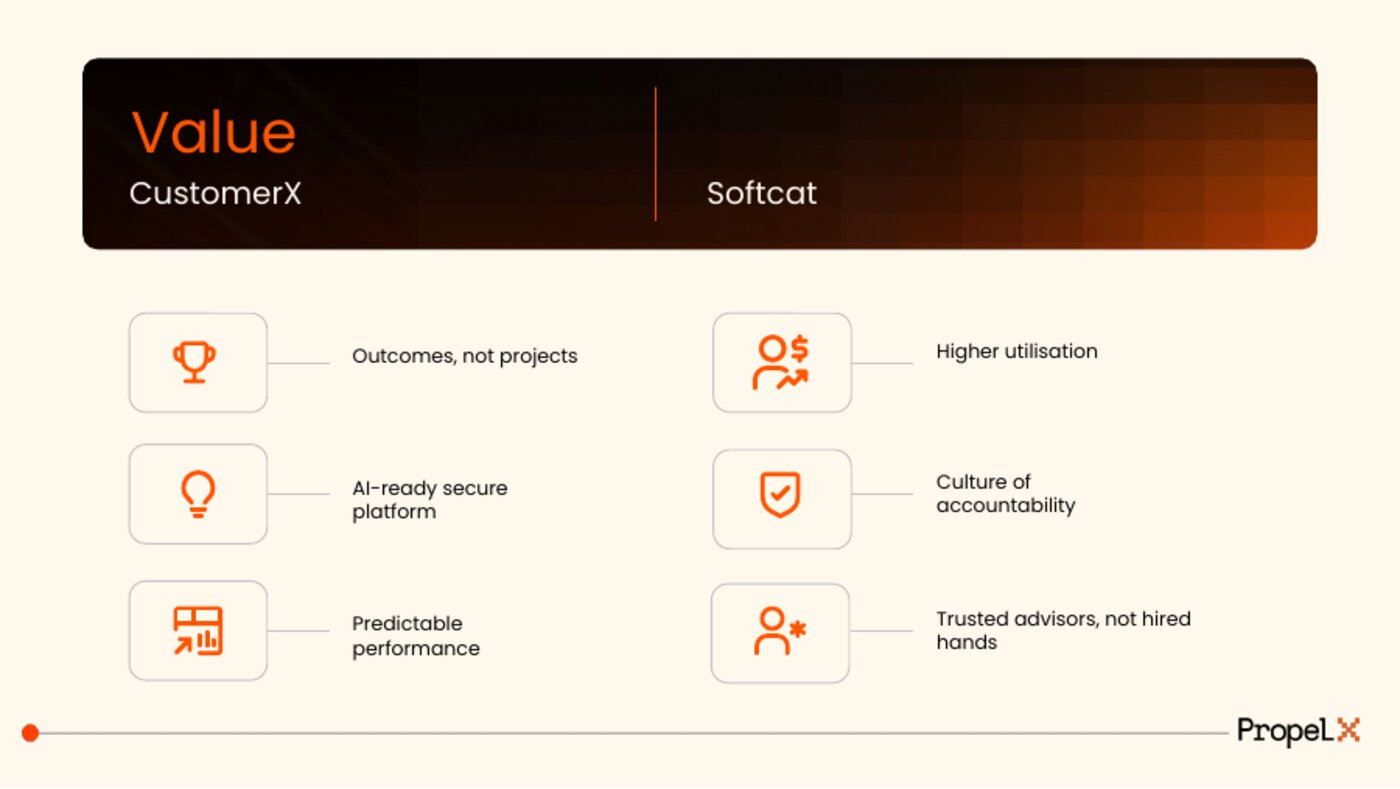
For the customer, outcomes, not projects. They are operating an AI-ready, secure platform with predictable performance. Their board sees IT as an enabler again, not a risk.
For us, Professional Services became a true strategic lever. Higher utilisation. Better alignment to our technology strategy. A stronger culture of accountability. Consultants proud of the impact they deliver.
This was not about adding more processes. It was about clarity, alignment, and embedding PS in the places where it can make the biggest difference.
Are you selling time, or are you selling confidence?
Professional Services is not about selling time. It is about creating confidence. Confidence that what has been imagined can actually be delivered. When we get it right, when we align skills to strategy, when we focus on outcomes not hours, when we use technology to reduce risk and accelerate delivery. We stop being just another supplier. We become the partner that customers turn to when outcomes matter most.
So next time you think about PS in your organisation, ask yourself, are you selling time, or are you selling confidence?
For CustomerX, this was not about projects, timelines, day rates. It was about confidence. Confidence that what was imagined could actually be delivered.
That is what customers remember. That is why they come back.